
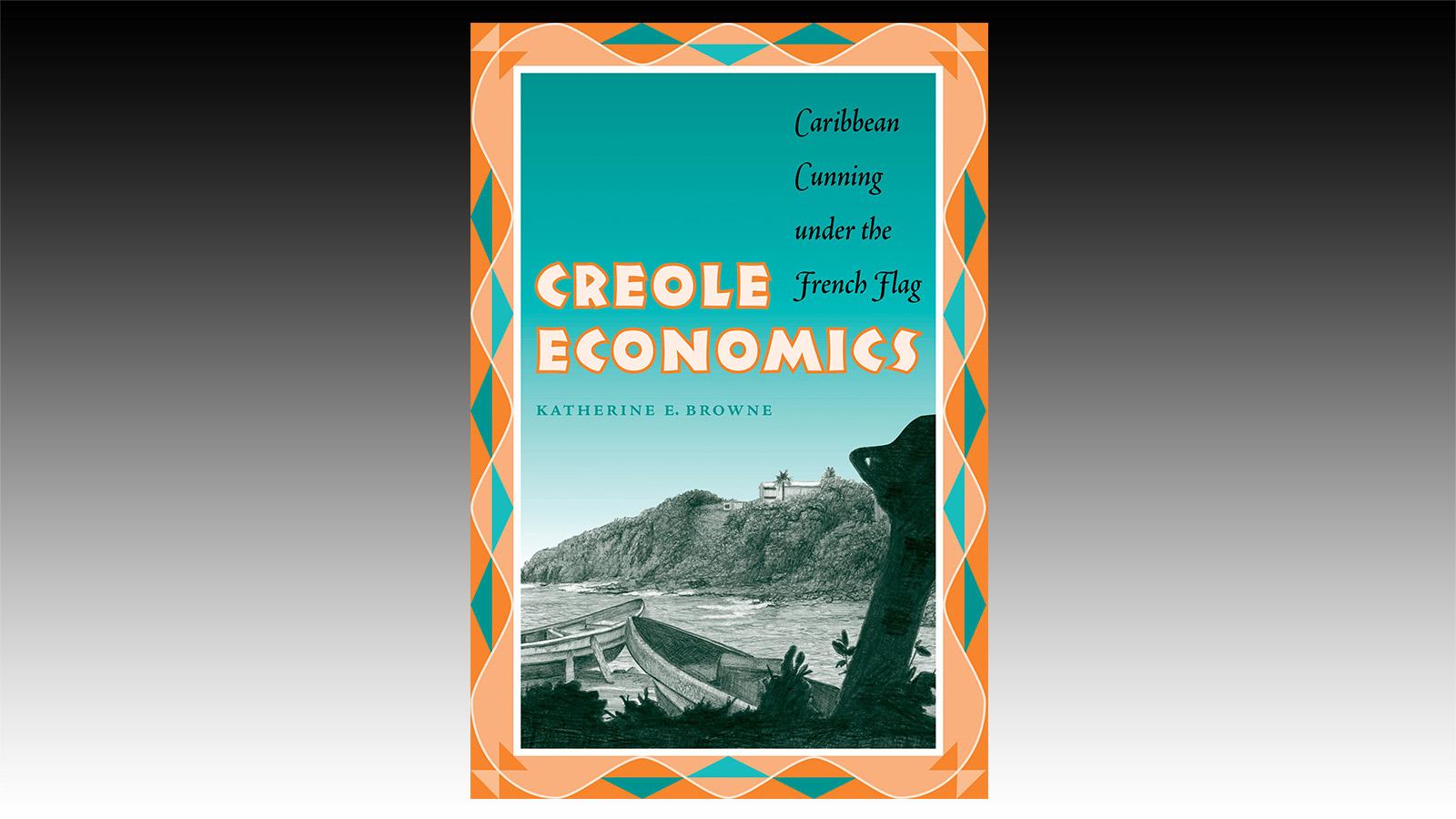
What do the trickster Rabbit, slave descendants, off-the-books economies, and French citizens have to do with each other? Plenty, says Katherine Browne in her anthropological investigation of the informal economy in the Caribbean island of Martinique. She begins with a question: Why, after more than three hundred years as colonial subjects of France, did the residents of Martinique opt in 1946 to integrate fully with France, the very nation that had enslaved their ancestors? The author suggests that the choice to decline sovereignty reflects the same clear-headed opportunism that defines successful, crafty, and illicit entrepreneurs who work off the books in Martinique today. Browne draws on a decade of ethnographic fieldwork and interview data from all socioeconomic sectors to question the common understanding of informal economies as culture-free, survival strategies of the poor. Anchoring her own insights to longer historical and literary views, the author shows how adaptations of cunning have been reinforced since the days of plantation slavery. These adaptations occur, not in spite of French economic and political control, but rather because of it. Powered by the "essential tensions" of maintaining French and Creole identities, the practice of creole economics provides both assertion of and refuge from the difficulties of being dark-skinned and French. This powerful ethnographic study shows how local economic meanings and plural identities help explain work off the books. Like creole language and music, creole economics expresses an irreducibly complex blend of historical, contemporary, and cultural influences.
Author information
Katherine E. Browne is Associate Professor of Anthropology at Colorado State University.
Reviews
Richard Price, Dittman Professor of American Studies, Anthropology, and History at the College of William & Mary:
"In this innovative work, Browne pierces the silence that has hidden the world of creole economics in the literature on the Antilles. The men's social world of creoleness has been much written about. But the ways that creoleness infuses everyday economic life, the ways that these practices that were built up in resistance (first to slavery, later to colonialism) actually operate, has never before been laid bare. A fine example of how anthropology still has something original to teach us."
"She has produced a highly personal yet analytically rigorous account of a French Caribbean isle, and to her great credit, she presents complex intellectual terrain as a most enjoyable read."
"In addition to being a beautifully written and deeply empathetic account, Browne’s book is visually striking…The result is a callaloo of careful scholarship and imagery that is both enjoyable to read and a significant contribution to economic anthropology and Caribbean studies."
"Persuasive and engagingly written, Creole Economics should be required reading in anthropology, economics, and Caribbean Studies courses."
- Se connecter ou s'inscrire pour publier un commentaire
- 177 vues
08/10/2026 - 11:35

Article de Paris Match
07/10/2026 - 12:40

06/10/2026 - 08:18

03/10/2026 - 09:46
Antilla
25/09/2026 - 22:46